The brake pedal sinking to the floor is a scary moment, to say the least, and the last thing you need when you’re behind the wheel. And when that happens, it can only mean one thing: Your hydraulic braking system has lost pressure somewhere along the lines.
A functional brake pedal works simply because of the principle that brake fluid can’t be compressed, which allows it to transmit the force from your foot directly to the calipers at each wheel. That’s how the car stops. But if air was to find its way into that system or the fluid a way out, that same force has nowhere useful to go, and with nothing to push against, the pedal doesn’t resist. NHTSA’s crash data shows that defective brakes are a factor in roughly 22% of vehicle-related crashes in the United States. As far as signals of faulty brake systems go, it doesn’t get any clearer than a pedal that sinks to the floor.
The good news is that it almost always comes down to one of four causes. To tell which one it is you’re dealing with depends on how the pedal behaves. It could be the pedal goes soft the moment you press your foot on it or perhaps it holds for a moment then slowly drops under steady pressure. Neither case is any better than the other, so don’t drive on.
Four things that cause this and how to tell them apart
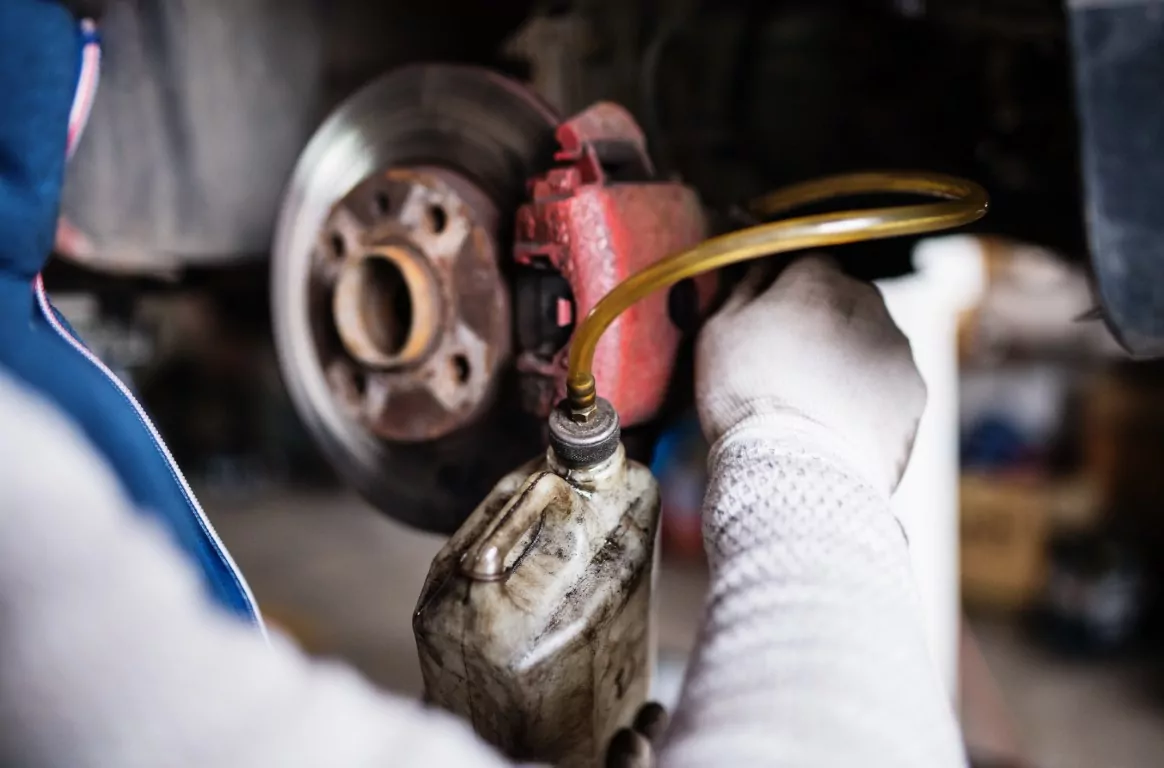
The most common cause is one we highlighted above: Air in the brake lines. We also mentioned that brake fluid is incompressible, which is the whole point behind its usefulness. Air, on the other hand, is easily compressed, which means it being inside the brake system is a problem. For one, it lowers the fluid’s boiling point, impairing its effectiveness in the process by creating vapor bubbles in the lines and causing the pedal to travel further down before engaging as the air gets squeezed. Is it fixable? Yes. Simply bleed your brakes, and find out how the air or water sipped in to begin with. Then replace the brake fluid accordingly.
Brake fluid leaks are the second cause. Cracked lines, failing caliper seals, wheel cylinders, all these can allow fluid to escape along with the pressure. A low reservoir is often the first clue, but not a definitive one, as worn brake pads can also pull fluid deeper into the lines even without an actual leak. A failing master cylinder is another cause. This occurs when the internal rubber seals are worn out, allowing fluid to bypass them instead of building pressure. The telltale sign for this is a pedal that holds for a beat before sinking slowly. Fourth is brake booster failure, characterized by the pedal only going soft when the engine is running resulting from the booster losing vacuum supply, not the master cylinder.
What to do if it happens while you’re still moving
If you’re on the road and the pedal drops, first things first, keep the engine running. Shutting it off means you lose power steering and any remaining vacuum assist to the brake booster, making it harder to control. A guide on brake failure recommends pumping the pedal rapidly for a start. Doing so can prove handy in instances where you’re dealing with partial pressure loss, by rebuilding just enough hydraulic pressure to slow you down. If the car has lost all fluid, it won’t help, but it’s still the right first thing to do in that situation.
Downshift. Dropping into the lower gears allows the engine’s internal resistance to slow you down without the brakes. After you attain a reduced speed, try to engage the parking brake, but do so gradually. Doing it hard at speed can lock the rear wheels and cause a spin, which is dangerous, not only to you but other road users as well. Turn on your hazard lights and find a good spot to pull over, like an uphill grade on the side street or a parking lot.
Once you’ve stopped, don’t move. Don’t get back on the road even if the brakes had earlier partially recovered. According to AutoZone’s brake service guidance, a sinking pedal means your car’s hydraulic system is compromised, and there’s no warning for full failure. Simply call a tow, and have the pros fix it for you.